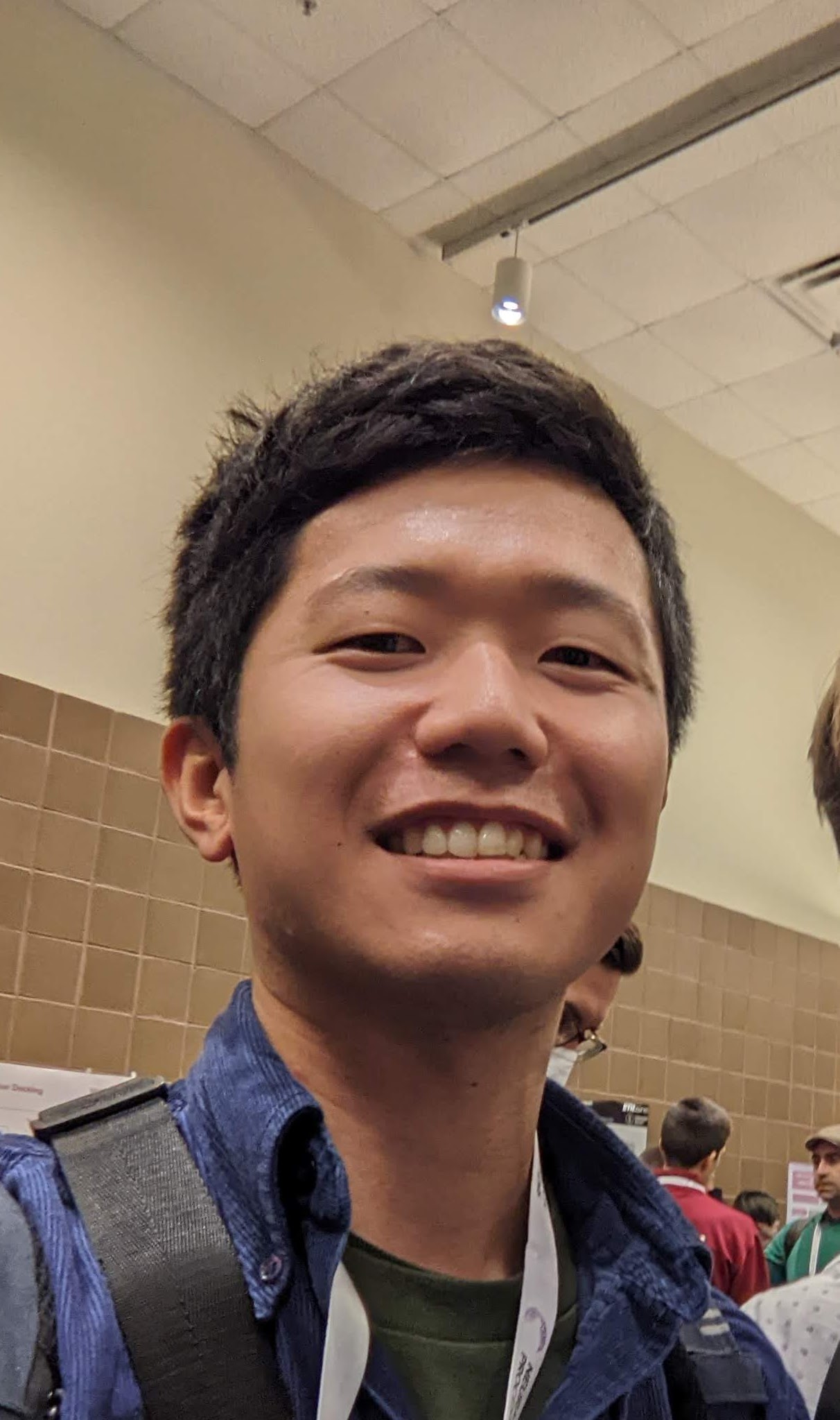
Shuhei Watanabe (渡邊修平)
Senior Research Scientist
Contact: shuhei.watanabe.utokyo [at] gmail.com
Brief Biography
Robotics senior research scientist at SB Intuitions, previously Optuna core developer with 1,500+ citations on Google Scholar. My specializations are Bayesian optimization and robot learning. I built GPSampler from scratch and delivered ~300x speedups to the sampler and importance modules. During my MSc with Prof. Frank Hutter, I primarily worked on algorithm development for Bayesian optimization, specifically tree-structured Parzen estimator (TPE), which is Optuna's default sampler. I first-authored two TPE papers at IJCAI and a TPE analysis paper, which is only available via arXiv, though it has accumulated 700+ on Google Scholar. Another contribution is PED-ANOVA, the current Optuna default importance module. I am also a coauthor of the multi-objective TPE paper. Please check my CV for my academic & professional background.
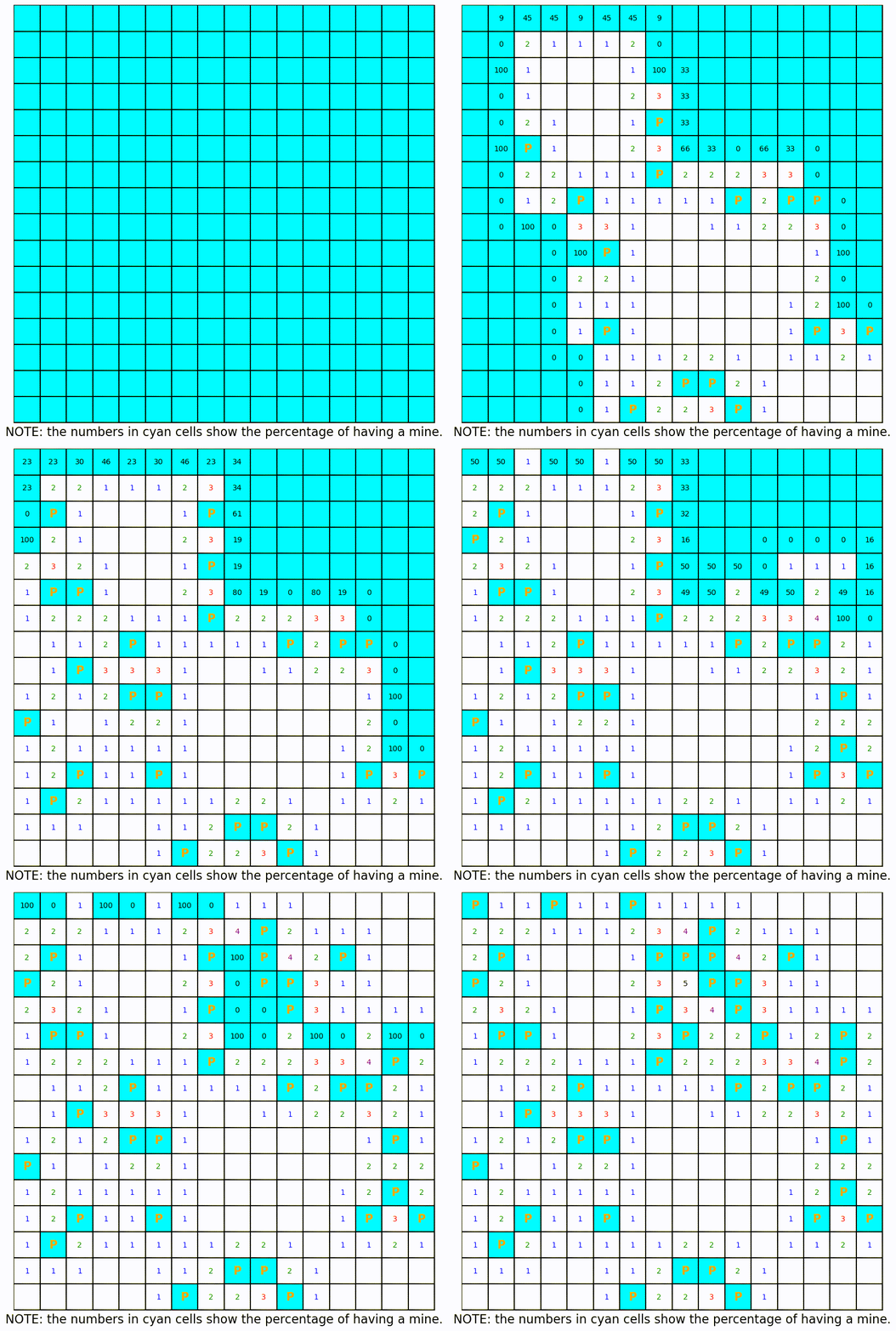
I love MineSweeper, having motivated me to create the game itself in TypeScript and its solver.
Technical Highlights
Please take a look at My Skill Page for more details.
Optimization
I have worked on optimization both in academia and industry. Although my publications strongly lean toward Bayesian optimization, classical optimization knowledge, such as (quasi-) Newton method, and (mixed-integer) linear programming, is also essential for the acquisition function optimization.
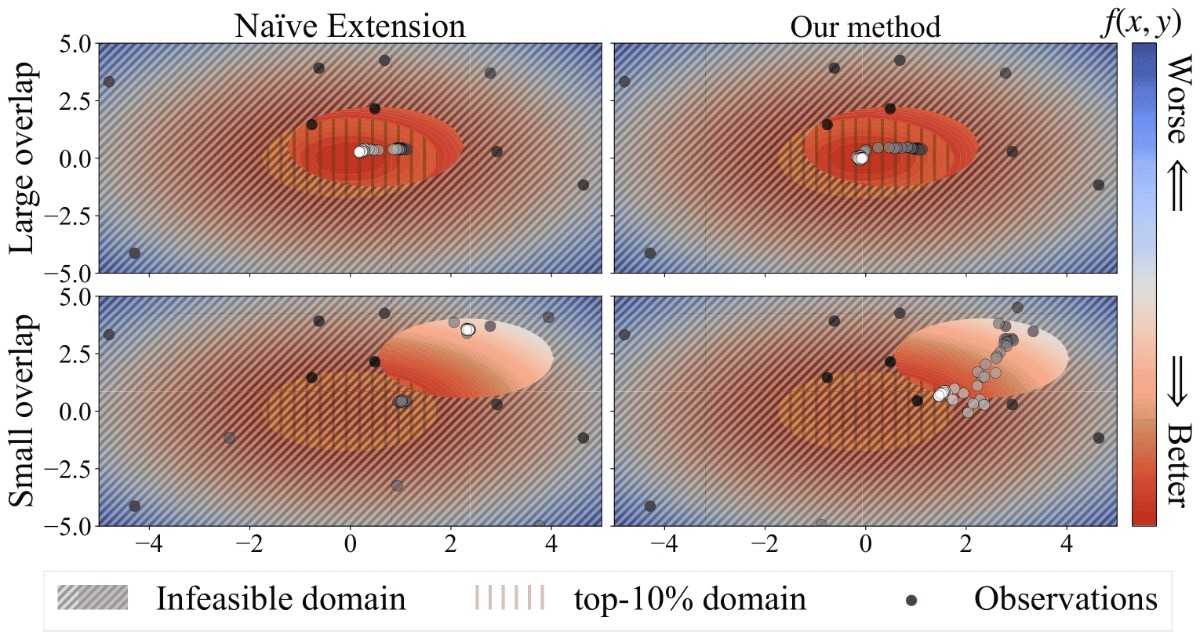
I was also intensively working on real-world applications of Bayesian optimization, including the extensions of TPE to multi-objective optimization, constrained optimization, and meta-learning setups, and materials discovery and Sim2Real transfer applications. Importantly, these applications require significant engineering efforts and dirty work to enhance the practical performance through trial and error. The dirty work necessitates convenient tools for analysis, and one of the tools inspired during these works is PED-ANOVA accepted to IJCAI'23.
Statistics
Parallel Computations
OSS Activities
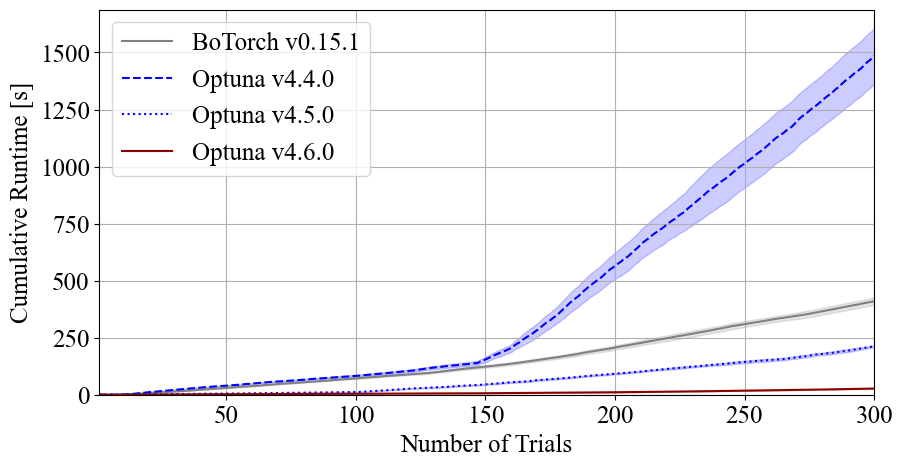
- Development of GPSampler and its extensions (multi-objective, constrained, robust optimizations, and 60x speedup),
- Speedup of TPESampler (300x speedup),
- Enhance the robustness of the Optuna backend,
- c-TPE implementation available in OptunaHub (the paper is accepted to IJCAI'23),
- PED-ANOVA implementation available in Optuna, which is now the default algorithm in Optuna Dashboard (the paper is accepted to IJCAI'23),
- Multi-mbjective TPE implementation available in Optuna (the paper is accepted to JAIR),
- Warm-starting CMA-ES implementation available in Optuna (the paper is accepted to AAAI'21), and
- Community activity to bridge AutoML research groups and the Optuna team.
[DIY] Simulators
Technical Stack
- Knowledge: Machine Learning, Deep Learning, Reinforcement Learning, Algorithm & Data Structure (top 3.5% in AtCoder)
- Languages: Python, LaTeX, C++, TypeScript
- Frameworks: NumPy, PyTorch, React
- Clusters: Slurm, MOAB, Kubernetes, ABCI